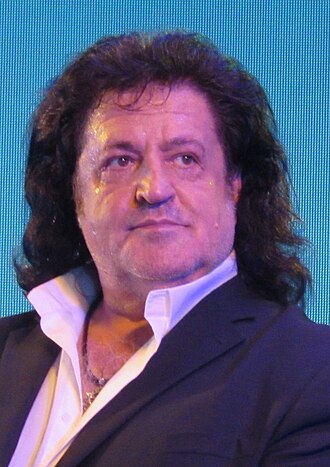
Ivan Vasylovych Bobul, better known by his stage name Ivo Bobul, is a Ukrainian artist who has become a true legend of the stage. A native of the Chernivtsi region, the singer was initially known only within his small hometown at the dawn of his career, but by the early 1990s he had achieved nationwide fame, and in 1998 he was named a People’s Artist of Ukraine.
Childhood and Youth
Ivo Bobul was born on June 17, 1953, in the village of Terebleche in the Chernivtsi region of Ukraine. He spent his childhood in Bukovina, but his youth was spent in the Donetsk region.
Real Name and Background
As already mentioned, the singer’s real name is Ivan Vasilyevich Bobul. He was born into a large family; he has four brothers and three sisters. The future singer’s father was a forester and also played the cimbalom, while his mother sang, so it is no surprise that little Ivo was drawn to music from an early age.
Ivan’s home village is located right on the border with Romania, and his father was of Romanian descent, while his mother was Romanian. As the artist recounted in one of his interviews, his father, Vasily Bobul, fought in the Austro-Hungarian Army and was wounded four times. When Ivo was in seventh grade, his father died, which had a profound impact on the family.
His mother had to send her sons to a boarding school, where Ivo spent a year. As the artist admitted, it was a difficult time for him, but he learned to be independent there.
After graduating from school in his native village, Ivan enrolled in a vocational school in Slavyansk, Donetsk Oblast, where he trained to become a ceramic turner. It was during his time at the school that he decided to participate in an amateur talent contest, which can be considered the start of his singing career.
At this competition, the future artist took second place and qualified for the regional festival. Music gradually became a bigger part of his life, and while serving in the army, he performed concerts at military units.
First Signs of Musical Talent
Ivo Bobul, as already mentioned, was born into a “musical” family, so he was introduced to music at an early age. While attending school in Slavyansk, he not only sang but also learned to play the guitar, even though he had no formal musical training at the time.
Education and development as a vocalist
Ivo Bobul’s development as a vocalist took place in several stages. He participated in amateur performances, performed with a military band, studied at the Chernivtsi Music School, and then—already as an adult—at the Kyiv Municipal Academy of Variety and Circus Arts.
Musical education
In the second half of the 1970s, Ivo Bobul decided to systematize his knowledge and enrolled in the Chernivtsi Music School. There he received basic training in vocal technique, stage performance, and music theory.
Later, the artist continued his education in Kyiv, graduating from the Kyiv Municipal Academy of Variety and Circus Arts. His studies allowed him to refine his performance technique and expand his creative possibilities. His professional training became a crucial step in the development of his future stage career as a singer.
Military Service and Concert Experience
During his military service, Ivan Vasilyevich played in the orchestra, even though he had no formal training in music at the time. There, he learned to play the viola and mastered music notation.
His military performances served as a unique training ground for his stage craft. There he learned how to connect with an audience and, in his own words, learned discipline. Many of the skills he acquired during this period later proved useful in his professional career on the philharmonic stage.
First Earnings and the Path to the Professional Stage
After his demobilization, Bobul returned to Chernivtsi. For about six months, he worked repairing railway car generators, and then received an offer to sing at a restaurant: Ivo’s sister introduced him to a conductor who noticed and appreciated the young man’s talent.
During this period of his life, Ivan Vasilyevich began looking for opportunities to establish himself as a professional performer. He earned his first fees performing at dance parties, festive events, and concerts by artistic ensembles. These performances allowed him not only to earn money but also to gain the necessary experience.
Thus began Ivo Bobul’s path to the professional stage. His confident vocals, expressive delivery, and baritone timbre set the artist apart from many other aspiring performers. In the future, his voice and performance style played a huge role in earning him truly nationwide fame.
The Beginning of His Professional Career
Ivo Bobul’s professional career as a singer began in the late 1970s. It was then that he had the opportunity to work in concert ensembles that collaborated with philharmonic societies and cultural institutions. This period laid the foundation for the artist’s further growth.
Working in ensembles allowed the performer to expand his repertoire and meet experienced musicians. Thanks to constant touring, he gained experience performing at large venues. Gradually, his name became increasingly recognizable among fans of Ukrainian pop music.
The “More” Ensemble and the Crimean Philharmonic
In 1979, Ivo Bobul became the lead vocalist of the vocal-instrumental ensemble “More,” which was affiliated with the Crimean State Philharmonic. For the young artist, this was a major professional achievement. Working in the ensemble gave him the opportunity to perform regularly before large audiences.
It was here that the singer gained experience in large-scale touring. The ensemble’s repertoire included both popular pop songs and folk-themed songs. Working in Crimea became an important stage in the artist’s development as a professional vocalist, but, as Bobul himself admitted, he did not want to sing other people’s songs; he wanted to turn his own songs into hits. So a year later, he left “Morya” and returned to Chernivtsi.
Return to Chernivtsi and work with the vocal-instrumental ensemble “Cheremosh”
After working in Crimea, Bobul returned to Chernivtsi and joined the vocal-instrumental ensemble “Cheremosh.” This ensemble, affiliated with the Chernivtsi Regional Philharmonic, was well known in the western regions of Ukraine. Here, the performer had the opportunity to work more actively with Ukrainian musical material; he sang alongside Aurika and Lydia Rotaru—the sisters of the true legend of Soviet pop music, Sofia Rotaru.
Working in the ensemble allowed the artist to delve deeper into his Bukovinian roots. He actively participated in tours and various cultural events. It was during this period that the performance style that would later become his trademark took shape.
The “Living Water” Ensemble
The next significant stage was his work with the “Living Water” ensemble, which Ivo Bobul joined from “Cheremosh” a year later. The group was popular thanks to its modern sound and high-quality vocal parts. Bobul quickly became one of the ensemble’s leading soloists.
As part of the group, he participated in numerous tours and television projects. These performances contributed to the growth of his popularity not only in Ukraine but also beyond its borders. Many of the artist’s future famous hits began to take shape during this period.
For example, it was during his time with “Zhyva Voda” that the first album was recorded, featuring songs by composer L. Dutkovsky that later became hits. These included, in particular, such compositions as “If You Love, Love,” “Starry Night,” “My Land, My Land,” “I Saw the Mountains,” and others.
Breakthrough and Popularity
Despite a fairly successful career as a member of “Zhyva Voda,” Ivo Bobul left the group a few years later. As he mentioned in his interviews, this decision was made due to an unhealthy atmosphere. The artist resigned from the Chernivtsi Philharmonic and took a job at the Ternopil Philharmonic in the “Vivaton” ensemble. He also worked at the Kyiv variety theater “Etude.”
During this period, the artist’s popularity was mainly regional, but his real breakthrough came in 1990 with the release of the song “I Will Return to Ukraine.” It was then that Moscow composer Alexander Morozov took notice of the singer and invited him to his music center. This center was located in Cherkasy, and it was there that the songs were released that made Ivo Bobul a true star of traditional Ukrainian pop music.
Hits of the Early 1980s and 1990s
In the early 1980s, the singer recorded a number of songs that brought him his first major fame. His songs were regularly played on the radio and at concert venues. Songs such as “Zoryana Nych,” “Yshcho Lyubish, Kohay,” “Ya Pobachiv Hory,” and “Miy Kray,” written specifically for Bobul by composer Levko Dutkovsky, were on everyone’s lips.
The songs performed by Ivo Bobul combined lyrical depth with melodic beauty. These compositions helped shape the artist’s distinctive creative style. Many of them have become part of the golden repertoire of Ukrainian pop music.
The Most Famous Songs
When fans look for Ivo Bobul’s songs, they most often recall such compositions as the previously mentioned “Dushy Krynytsia” and “Na Ukrainu Povernus,” as well as “Bereg Lyubovi,” “Yshcho Lyubish — Kohay,” “Stare Dzherelo,” “Ridna Khata,” “Holuba Voda,” “Misyachne Koleso,” “A Lypy Tsvitut,” “Promin Mogo Sercya,” and a number of other works.
It is noteworthy that many of them remain popular today. Thanks to the high-quality vocals, the songs retain their popularity among different generations of listeners. They continue to be part of the artist’s concert repertoire.
Albums and Recordings
Over the course of his career, Ivo Bobul has released several full-length albums and dozens of singles. His discography reflects the different stages of his artistic development. It includes both patriotic and romantic compositions:
1991 — “The Well of the Soul”;
1993 — “Bereg Lyubovi”;
2002 — “Topolina Lyubov”;
2002 — “The Heavens of Your Eyes”;
2002 — “Emigrantka”;
2004 — “Songs for You”;
2004 — “River of Life”;
2006 — “You Are My Dream.”
The singer’s recordings were released on various formats and reissued multiple times. Many of his works were included in thematic compilations of Ukrainian pop music. Thanks to this, the artist’s work remains accessible to new generations of listeners.
“The Well of the Soul”
The album “The Well of the Soul” was recorded on cassette. It features songs that cemented Ivo Bobul’s status as a popular performer. Many songs from this release became regular fixtures in his concert programs.
The album is characterized by its melodiousness and emotional depth. The themes of the songs touch on love, homeland, and human relationships. It is precisely these qualities that made the recording popular among a wide audience.
“Bereg Lyubovi”
The album “Bereg Lyubovi” continued the development of the artist’s romantic style. He released it in 1993 together with his wife, Lilia Sandulescu.
The collection received positive reviews from listeners and solidified the artist’s position on the music scene. Many tracks from the album became some of his most popular works. Some of them are still performed at concerts today.
Other Albums Since 2002
After 2002, the singer continued to record new songs and release albums. These retained the themes of love, family, and his homeland that were traditional to his work. At the same time, the sound gradually adapted to contemporary trends.
New releases were now coming out on CD, allowing the artist not only to maintain a connection with his loyal audience but also to attract a younger generation of listeners. In 2002, three albums were released at once—“Topolina Lyubov,” "The Heavens of Your Eyes," and "Emigrant," and in 2004—two albums, "Songs for You" and "The River of Life."
Duet with Lilia Sandulescu and creative collaborations with other artists
A special place in Bobul’s career is occupied by his creative duet with singer Lilia Sandulesu, who was not only Ivo’s stage partner but also his wife for approximately 10 years. Their joint performances were very popular in the 1980s and 1990s. The artists created a number of songs that became a notable phenomenon in Ukrainian pop music.
In addition to Sandulesu, the singer collaborated with other musicians, composers, and poets. For example, he most frequently worked with Ostap Gavrysh, Volodymyr Domshynsky, Oleksandr Zlotnyk, Vadym Kryshchenko, and others.
Ivo Bobul’s Personal Life and Family
The topic of Ivo Bobul’s personal life has repeatedly been the subject of media attention. It is known that the artist has been married four times: from his first marriage, which lasted only a few months, the singer has a son, Ruslan; from his second marriage, Ivan had a daughter, Lyudmila; in his fourth marriage, the singer became a father once again—he had a son, Daniil. However, Bobul has no children with Lilia Sandulesu.
All of Ivo Bobul’s children are now adults, and his eldest son lives in the United States. The singer has three grandchildren, whom he tries to spend time with, supports with gifts, and helps financially. The singer himself has admitted that he considers family well-being one of the main achievements of his life.
People’s Artist of Ukraine and Other Awards for Ivo Bobula
In 1995, the singer was awarded the honorary title of Honored Artist of Ukraine, and in 1998, that of People’s Artist. These awards recognized his long-standing contribution to the development of national musical culture.
In addition, Ivo Bobul was awarded the Order of “Miner’s Glory” 3rd Class, the Order of St. Nicholas the Wonderworker 1st Class from the International Prize Foundation, the Order of Yaroslav the Wise 5th Class, and others.
Over the years, the performer has repeatedly participated in and won various competitions, such as the “Young Voices” competition held in Ternopil in 1980, as well as the Soviet Song Competition in Sochi in 1983. He has performed on prestigious stages and participated in numerous music festivals. These awards were a natural culmination of his many years of creative work.
Interesting Facts About Ivo Bobul
Ivo Bobul is a singer who managed to build a successful career without a musical dynasty or a head start in the capital. His journey began with amateur performances and army concerts and culminated in recognition at the national level. His Bukovinian roots and respect for folk musical traditions have always played an important role in his artistry.
His biography contains many interesting stories. For example, in his youth, he once nearly ended up behind bars for playing the guitar on the street, but managed to escape. It is also interesting to note that the artist lived in the U.S. for a while: he went there with Lilia Sandulesu to visit friends, but ran into his colleague from the band “Living Water,” Slava Medianik, who invited Ivo to sing at his new restaurant. The artist agreed and ended up spending two years in the U.S.
Another interesting fact is related to the singer’s dream of participating in the famous “Eurovision” contest. As he once admitted in an interview, Bobul rates his chances highly: in his opinion, he would definitely have made it into the top ten if he had participated.
Today, despite his advanced age, the artist keeps up with modern trends. In the 2000s, he became the main character in a satirical song by the band TNMK, and he enjoyed the irony. So in 2015, he performed this song live with TNMK at a concert in Kyiv.
Many fans are curious about what Ivo Bobul is up to these days. The artist continues to perform, participates in television projects, gives interviews, and meets with fans. Ivo Bobul’s concerts still draw a loyal audience, and his live performances retain that special atmosphere for which his numerous fans appreciate him.