Biography of Maxim Kurnikov
Maxim Kurnikov is well known to audiences interested in independent journalism, socio-political analysis, and the development of contemporary Russian-language media. Over the course of his professional career, he has risen from a regional radio host to become one of the most prominent figures in the independent media landscape, combining the roles of editor, interviewer, editorial director, and organizer of new media projects.
Today, Maxim Kurnikov is associated not only with the legendary radio station “Echo of Moscow,” but also with international media projects, his work at the German publication Bild, the development of his own online publication, and numerous original programs. His professional reputation is built on a commitment to fact-checking, open discussion, and a respectful approach to his interviewees.
Russian journalist and media manager
Maksim Kurnikov is a Russian journalist, media manager, interviewer, editor, and host of current affairs and political programs. He gained the most recognition for his many years of work at the radio station “Echo of Moscow” and, later, for his role in creating new independent media platforms after the station’s closure.
He is highly regarded in professional circles for his organizational skills. In addition to his on-air work, Kurnikov has managed editorial processes, developed digital projects, and coordinated international editorial teams. His work spans news, interviews, social commentary, media management, and the development of modern digital journalism formats.
Maxim Kurnikov’s Childhood and Youth
Maxim was born on April 27, 1984, in Orenburg, but he spent his childhood and youth in the Kazakh city of Aktobe. It was there that the foundation for his future professional career was laid. Even during his school years, he showed a keen interest in public life, reading the press, political events, and the media.
The future Russian journalist realized early on that he was drawn to working with information. Even in his early years, he was interested in how news stories develop, how high-quality interviews are conducted, and why independent media play an important role in society.
Family and Upbringing
Little is known about Maxim Kurnikov’s family. According to various sources, his father was either an oil driller or a welder, and his mother was a homemaker. The journalist himself traditionally adheres to the principle of separating his public activities from his private life, so he rarely speaks about his parents or relatives.
From his few interviews, it is known that his family supported his desire to receive a quality education and advance in his profession. A love of reading, an interest in social issues, and a respect for intellectual discourse played a significant role in his upbringing.
The Future Journalist’s Education
Maksim received his higher education at the History Department of Orenburg State Pedagogical University. He also completed his graduate studies there but chose not to defend his dissertation. Even while a student, he actively collaborated with local media outlets, gaining practical experience that later became the foundation for his professional growth.
His university years allowed Kurnikov to become familiar with the principles of modern journalism, editorial work, and the preparation of materials in various genres. While a student, he underwent a two-month military training camp as a military psychologist.
Journalism Education
Kurnikov does not have a formal degree in journalism. However, as he himself noted, this profession requires constant self-education, so working in newsrooms, participating in major media projects, interacting with experienced colleagues, and daily practice became just as valuable a learning experience for him as any university.
Gradually, the young journalist mastered various aspects of the profession: on-air work, interviewing, reporting, editing, preparing analytical pieces, and feature writing.
The Start of His Journalism Career
Maksim began his professional career as a journalist in Orenburg. There, he served as editor-in-chief of *Echo of Moscow*, and later took the same position in Ufa. In 2018, Kurnikov moved to Moscow.
It was regional journalism that allowed him to master the basic principles of the profession: the timely preparation of stories, working with sources, conducting interviews, and covering events of public significance.
First Steps in Radio
Kurnikov joined “Echo of Moscow” in Orenburg in 2008. Working on the air required quick reactions and the ability to process information practically in real time.
Over time, Kurnikov became head of the Ufa bureau of “Echo of Moscow,” where he proved himself to be an effective organizer of editorial work. In total, he worked at regional radio stations for 10 years before moving to Moscow.
Recognition at “Echo of Moscow”
The next stage was working at the central editorial office of “Echo of Moscow,” now directly in the capital. Here, Maxim Kurnikov’s career gained new momentum.
The move to the capital opened up opportunities to participate in federal projects and conduct interviews with well-known politicians, public figures, experts, and representatives of the cultural community.
Gradually, he became one of the editorial office’s key staff members, participating in both on-air and organizational activities.
A Turning Point in His Career
A significant milestone was his appointment as deputy editor-in-chief of Alexei Venediktov’s radio station. In this role, Kurnikov focused on developing editorial policy, organizing the work of journalists, and launching new projects.
After “Echo of Moscow” ceased broadcasting in the spring of 2022, he was among those who helped preserve the team and create new independent media platforms.
Work Style and Topics
Kurnikov’s professional style is characterized by a calm manner of conducting interviews, a commitment to giving a voice to various participants in public discourse, and attention to detail.
The main areas of his work remain politics, public life, international relations, media, the development of civil society, and modern communications. In his reporting, he places great emphasis on fact-checking and seeking out multiple perspectives.
Key Projects
Over the years, the journalist has participated in a large number of media initiatives. Among his best-known projects are:
radio programs and interviews on “Echo of Moscow”;
serving as co-host alongside Ekaterina Shulman after Michael Naki left the “Status” project;
collaborating with Alexander Arkhangelsky on the documentary film *Famine*, dedicated to the 1921–1922 famine in the Volga region;
serving as editor-in-chief of Bild’s Russian-language service.
Each of these projects contributed to the journalist’s professional development and helped expand his audience far beyond Russia’s borders.
Editor-in-Chief of Bild’s Russian-language service
Following the events of 2022, Kurnikov moved to Germany and joined the German edition of Bild, where he helped develop the Russian-language news platform.
Working in an international media environment required adapting editorial processes to a new audience, as well as collaborating with journalists from different countries. There, he continued to produce content, develop editorial strategy, and organize the news service’s operations.
Founding and Leading the Echo Publication
After the radio station ceased broadcasting, the team from the former “Echo of Moscow” created a new online publication as well as the internet radio station “Echo.” Maxim Kurnikov announced this on the “Dozhd” television channel in September 2022.
In this project, Kurnikov served as the head and effectively became the chief editorial coordinator for the development of the new media platform. The publication continued to produce interviews, analytical pieces, news reviews, and original programs, upholding the traditions of professional journalism.
It was within the framework of this project that Maxim Kurnikov’s work as a media manager and organizer of editorial operations was most fully realized. Alexei Venediktov joined the new media outlet as a contributor but no longer holds a leadership position.
Currently, “Echo’s” broadcast schedule consists of programs from the YouTube channels of several editorial teams and independent journalists, as well as news bulletins from the outlet’s own news service. All of this is organized into a single audio stream.
Collaborations and Joint Projects
Today, Kurnikov regularly collaborates with well-known journalists, experts, public figures, and analysts.
Among his most prominent partners are representatives of the former “Echo of Moscow” team, as well as independent journalists working in international media. He participates in joint interviews, analytical programs, discussions, and special news projects.
Such collaborations make it possible to combine different professional approaches and expand the audience of Russian-language media.
Personal Life
Maxim Kurnikov’s personal life remains virtually closed off to the general public. The journalist very rarely comments on matters unrelated to his professional activities.
There is virtually no reliable information in open sources about his spouse, children, or family life. This stance is consistent with Kurnikov’s long-standing principle of keeping his public work and private life separate.
All that is known is that Maxim has been married since 2007, and his wife’s name is Yulia. The couple has a daughter, whose name has not been disclosed.
Current Activities
Maxim Kurnikov continues to be actively involved in independent journalism. He is involved in the development of the “Echo” project, collaborates with international media outlets, records interviews, hosts socio-political programs, and participates in professional discussions about the future of Russian-language media.
A significant portion of his work is focused on digital platforms, including video projects and online broadcasts. This makes his content accessible to audiences around the world.
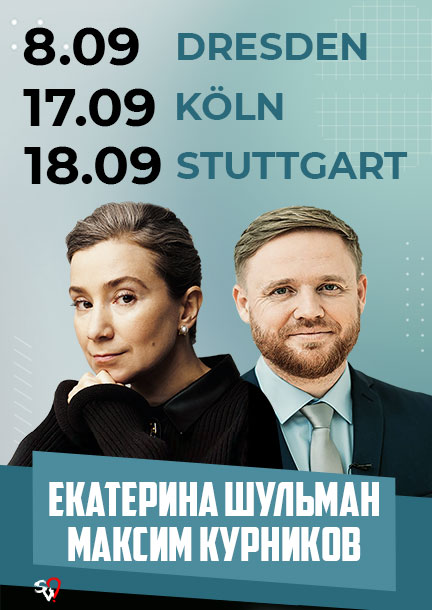
Together with Ekaterina Shulman, Maxim hosts the program “Status,” gives lectures, and records podcasts. In addition, he frequently gives book presentations.
Interesting Facts from Kurnikov’s Biography
Here are a few interesting facts about the journalist:
He learned Kazakh while studying in Aktobe, where he completed 10th grade;
He knows the Tatar and Bashkir languages;
upon returning to Orenburg, he graduated from a local high school;
According to him, the reason for his return to Orenburg was the difficult living conditions in Aktobe for his family and for himself;
He began his professional career in Orenburg’s regional media;
For a long time, he headed the Orenburg bureau of “Echo of Moscow”;
After moving to the capital, he became one of the heads of the federal bureau;
He participated in the launch of new independent media projects following the closure of the radio station;
He taught journalism at Moscow International University;
He combines editorial work, interviewing, and media management.
Interesting fact: Maxim is a recipient of the “Redkollegiya” independent journalism award and a participant in the SlovoNovo 2025 Forum.
Maksim Kurnikov’s Professional Achievements
Kurnikov’s professional career demonstrates how a journalist can successfully combine editorial work, public engagement, and the management of major media projects.
His achievements include:
leading the regional editorial office of “Echo of Moscow”;
serving as deputy editor-in-chief of a national radio station;
participating in the creation of the new “Echo” project;
developing Bild’s Russian-language service;
organizing international editorial projects and digital media initiatives.
Today, the journalist is not resting on his laurels. He is currently touring Europe with Ekaterina Shulman, giving lectures on historical topics.
Impact on Russian Journalism
Maxim Kurnikov’s career reflects the changes that independent Russian journalism has undergone in recent years. From regional radio broadcasting to international media projects, his professional journey demonstrates an ability to adapt to changing conditions without compromising basic journalistic standards.
Today, Kurnikov remains one of the prominent figures in the independent Russian-language media landscape. His work contributes to the preservation of professional editorial traditions, the development of digital media, and the maintenance of open public discourse. For many young journalists, his experience serves as a model of how to combine editorial responsibility, management skills, and a commitment to the principles of quality journalism.